A high-level event took place in Kyiv, uniting the international and national community to address the investigation of war crimes in Ukraine and the development of systemic assistance for those affected by Russian aggression.
The event featured a Ministerial Meeting of the Dialogue Group on Accountability for Ukraine, followed by the international conference “United for Justice. United for Survivors.”
In his video address during the opening of the event, Andriy Yermak, Head of the Office of the President of Ukraine, thanked all the states and institutions that support Ukraine.
“We are grateful to our international partners, particularly the Government of the Netherlands, for co-organizing this important event, and to all states and international institutions that stand shoulder to shoulder with Ukraine in this struggle. Your support, exchange of experience, and deepening of cooperation are critically important elements on the path to the triumph of justice,” stated Andriy Yermak.
“Large-scale human rights violations are a deliberate policy of Russia aimed at destroying Ukrainian statehood and national identity. The efforts of prosecutors, investigators, and experts are aimed at ensuring that no crime of this genocidal war goes unpunished, and that victims can feel justice in the nearest future,” emphasized Acting Prosecutor General Oleksii Khomenko in his opening remarks
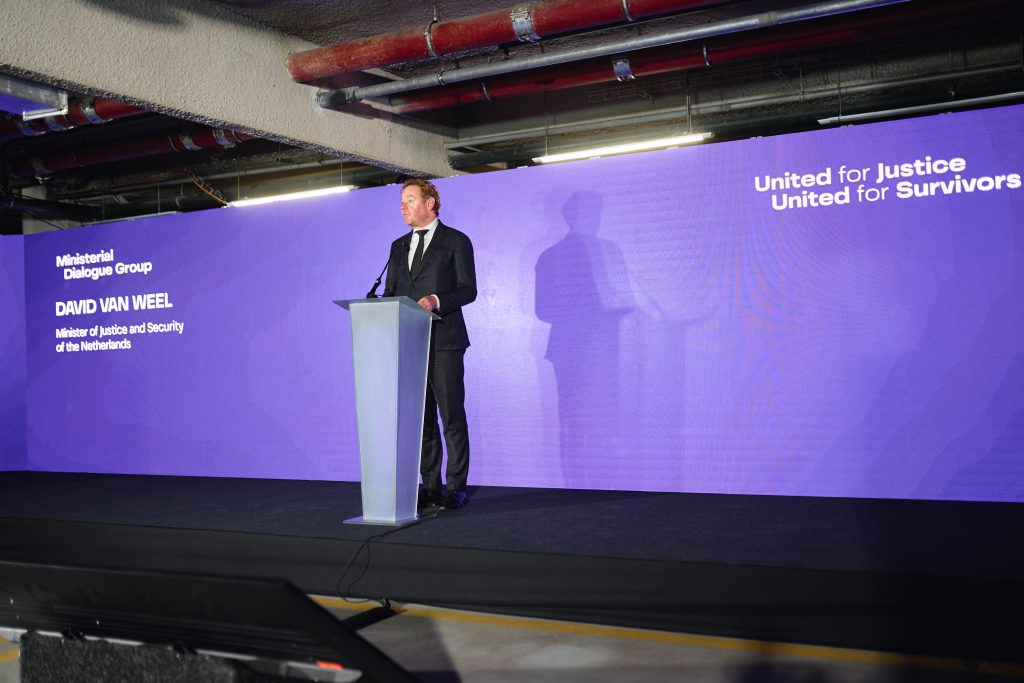
David van Weel, Minister of Justice and Security of the Netherlands, underlined his country’s commitment: “As a country that hosts several international courts and tribunals, the Netherlands has taken responsibility for ensuring there will be no impunity for the perpetrators of international crimes committed in Ukraine.”
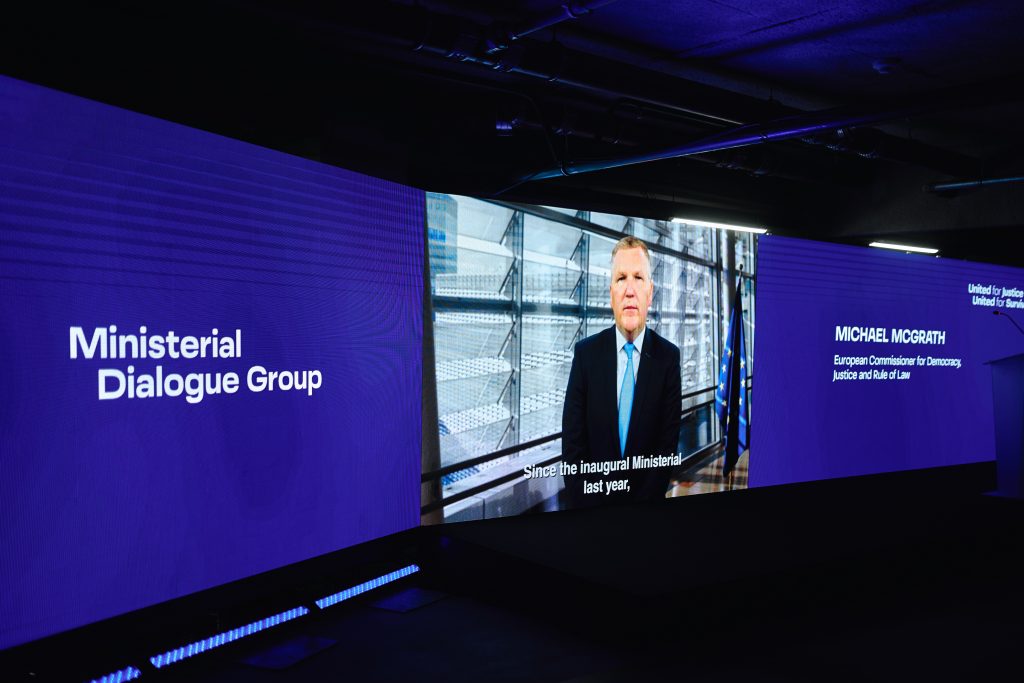
EU Commissioner Mc Grath addressed the participants via a recorded message about the importance of collective action and commitment delivering justice to the people of Ukraine. “Within two years, the Dialogue Group—co-chaired by Ukraine, the ICC, the EU, civil society organizations, and with the support of The Netherlands—has evolved to enable effective cooperation between 33 states. And I would warmly welcome other states in joining too,” stated Commissioner Mc Grath.
“Justice is not only about punishing perpetrators — it is also about protecting and restoring the dignity of every survivor. We continue to ensure that every legal tool and international agreement supports this goal. Today, we are truly united for justice — and for those who need it most,” emphasized Deputy Prime Minister for European and Euro-Atlantic Integration of Ukraine—Minister of Justice, Olha Stefanishyna.
Sarah Sackman, UK Minister of State at the Ministry of Justice, shared the following sentiment: “I have heard first-hand accounts of the devastation and pain caused by Putin’s criminal invasion of Ukraine, and the need to bring perpetrators to justice. While our Ukrainian friends fight for their independence, their victories on the battlefield must be backed by support for reconstruction, including a resilient justice system. We will share best practices to advance vital justice reforms so that Ukraine strengthens the rule of law, supports economic prosperity, and protects its democracy.”
The participants were also addressed by Katarína Mathernová, EU Ambassador to Ukraine and Rolf Holmboe, Head of the EU Advisory Mission in Ukraine (EUAM Ukraine). Among the honored guests was Nida Grunskienė, Prosecutor General of Lithuania.
The event aimed to deepen understanding of the war’s impact on victims and to identify ways to ensure their participation in justice processes without re-traumatization. It was attended by over 400 guests and speakers, including representatives of governments, justice bodies, international organizations, civil society, human rights defenders, and experts from numerous countries.
The first part was dedicated to the work of the Dialogue Group, established at the initiative of the Dutch government. This is a key coordination platform that brings together states, international, and non- governmental organizations to support Ukraine in documenting and investigating international crimes.
The Ministerial Dialogue Group session served as a strategic platform to assess the progress achieved through the Dialogue Group’s coordination work since April 2024 and to outline key priorities for 2025.
Ministers and institutional representatives reviewed the Dialogue Group’s contributions across several thematic pillars. These included sustained advocacy for the harmonization of Ukrainian legislation with international law, including Rome Statute obligations; the advancement of victim and witness protection frameworks, grounded in trauma-informed and survivor-centered practices; and the promotion of evidence collection and OSINT integration as essential tools in the investigation and prosecution of international crimes. Participants emphasized the need for clear procedural guidance and strengthened legal safeguards to ensure the authenticity and admissibility of digital evidence. “The victims of this war and their stories are the driving force behind our work, and delivering justice to them is a moral obligation. Eurojust remains a reliable partner to the Ukrainian authorities and will continue to support the work of the Dialogue Group, which has proven to be an important platform for the coordination of accountability efforts,” stated Michael Schmid, President of Eurojust.
Special attention was given to crimes against and affecting children, such as unlawful deportations, forced displacement, and the psychological toll of repeated interviews. The Dialogue Group reaffirmed its commitment to child-sensitive justice, highlighting the importance of unified crime classification, enhanced coordination between institutions, and increased access to forensic and psychological expertise.
The Dialogue Group addressed funding gaps caused by changes in the geo-political landscape. During the pledging segment, a number of states (UK, Switzerland Netherlands) and partners expressed their commitment and continued support for Ukraine’s accountability efforts, emphasizing the importance of sustained investment in investigative capacity, legal reform, and victim services. In a recorded statement, Caspar Veldkamp, Minister of Foreign Affairs of the Netherlands, reiterated his country’s unwavering support for ‘Restoring Justice for Ukraine’: “Now, more than ever—even more than at the start of the war—it is vital that Ukraine receives all the support it needs: for lasting peace, for reconstruction, and for the prosecution of war crimes,” he emphasized in his video address.
The Deputy Head of the Office of the President of Ukraine, Iryna Mudra, also addressed the conference participants during the Dialogue Group meeting. She specifically thanked the Kingdom of the Netherlands for their unwavering support and leadership in justice and accountability, leading one of the most important points of Ukraine’s Peace Formula, Point Seven, Restoration of Justice.
Representatives from the Atrocities Crimes Advisory Group, Ambassador Clint Williamson and Claudio Pala participated in the conference. Claudio Pala underlined the need for continued coordination, and the complementarity of ACA to the Dialogue Group. The latter providing overall coordination, whereas ACA complements, from a more technical advisory role, the Ukrainian system on accountability international crimes. Following the Ministerial session, the broader United for Justice Conference continued with a series of thematic panels, further elaborating on shared priorities addressed in the morning. Discussions explored the role of victims and witnesses in criminal proceedings, the protection of children and vulnerable populations, holistic support models for survivors, and the challenges and responsibilities of communicating about victims and prevention of re-traumatisation. These sessions enriched the Ministerial-level discussions by deepening engagement with civil society, practitioners, and survivor networks.
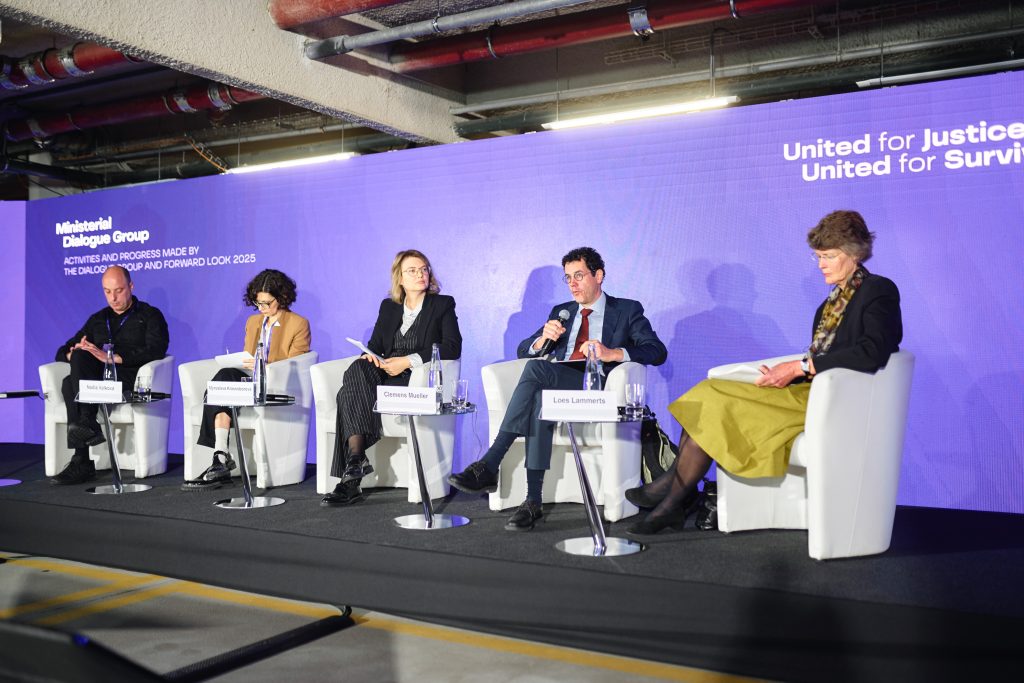
Discussions also featured Clemens Mueller, Rule of Law Expert at the European Commission and the EU Delegation to Ukraine; Serhii Naumiuk, Deputy Head of the Security Service of Ukraine; Yurii Bielousov, Head of the Department for Combating Crimes Committed in the Context of Armed Conflict, Prosecutor General’s Office, and others. The Ukrainian civil society was represented, among others, by Nadia Volkova, Founder and Director of the Ukrainian Legal Advisory Group (ULAG). The first panel discussion of the Dialogue Group was moderated by Loes Lammerts, Senior Policy Advisor at the Ministry of Foreign Affairs of the Netherlands, and the second by Myroslava Krasnoborova, Liaison Prosecutor for Eurojust.
As the Dialogue Group looks ahead to 2025, it remains committed to fostering coherence among national and international efforts, reinforcing survivor-centered justice, and driving forward operational, legal, and
institutional reforms. The day’s discussions reaffirmed that accountability efforts must not only be effective— they must be grounded in the lived realities and rights of survivors.
The second part of the event – the international conference, “United for Justice. United for Survivors” – was dedicated to protecting the rights of victims and witnesses of war crimes.
One of the key topics on the conference was the protection of children’s rights as the most vulnerable group during armed conflict. This panel underscored the importance of returning Ukrainian children deported or forcibly displaced by Russia. Speakers included Daria Zarivna, Advisor to the Head of the Office of the President of Ukraine and COO of Bring Kids Back UA; Viktoria Litvinova, Deputy Prosecutor General; Daria Herasymchuk, Advisor – Presidential Commissioner for Children’s Rights and Child Rehabilitation; Baroness Helena Kennedy, Director of the Human Rights Institute of the International Bar Association; and Alexis Demirdjian, Trial Lawyer and Deputy Head of the Ukraine Situation Team at the Office of the Prosecutor of the International Criminal Court.
Another panel examined the rights of victims in criminal proceedings, featuring Clint Williamson, Coordinator of the Atrocity Crimes Advisory Group (ACA) for Ukraine; Halyna Mykhailiuk, Deputy Chair of the Verkhovna Rada Committee on Law Enforcement; Markiyan Kliuchkovskyi, Executive Director of the Register of Damage for Ukraine, and others.
Additionally, two thematic panels on the conference’s sidelines discussed international experiences in assisting victims of war crimes and trauma-informed communication with and about survivors. Participants included Andriy Kostin, designated Ambassador Extraordinary and Plenipotentiary of Ukraine to the Kingdom of the Netherlands; Daria Marchak, First Deputy Minister of Social Policy of Ukraine; Kateryna Levchenko, Government Commissioner for Gender Policy; Mark Ellis, Executive Director of the International Bar Association (IBA), as well as other leading experts and government officials. The civic sector was actively engaged in these discussions, with contributions from Nataliya Gumenyuk, Co-Founder of the Public Interest Journalism Lab; Lyudmyla Huseynova, Head of the NGO “NUMO, SESTRY!”; and Wayne Jordash, President of the GRC Foundation, who moderated one of the panel discussions.
From the first months of Russia’s full-scale aggression, the Prosecutor General’s Office has prioritized the implementation of victim-oriented approaches and the development of a comprehensive support system for them. This is an integral part of restoring justice, just as proving the enemy’s crimes in court.
A Coordination Center for the Support of Victims and Witnesses has been established. Relevant units are already operational in 9 regional prosecutor’s offices. Thanks to the center’s work, victims can access legal, psychological, medical, and other types of assistance from specialized institutions and foundations.
Concluding remarks were delivered by Rolf Holmboe, Head of the EU Advisory Mission in Ukraine (EUAM Ukraine), and Oleksii Khomenko, Acting Prosecutor General. They thanked the conference participants for their commitment expressed for this agenda and for the productive day.
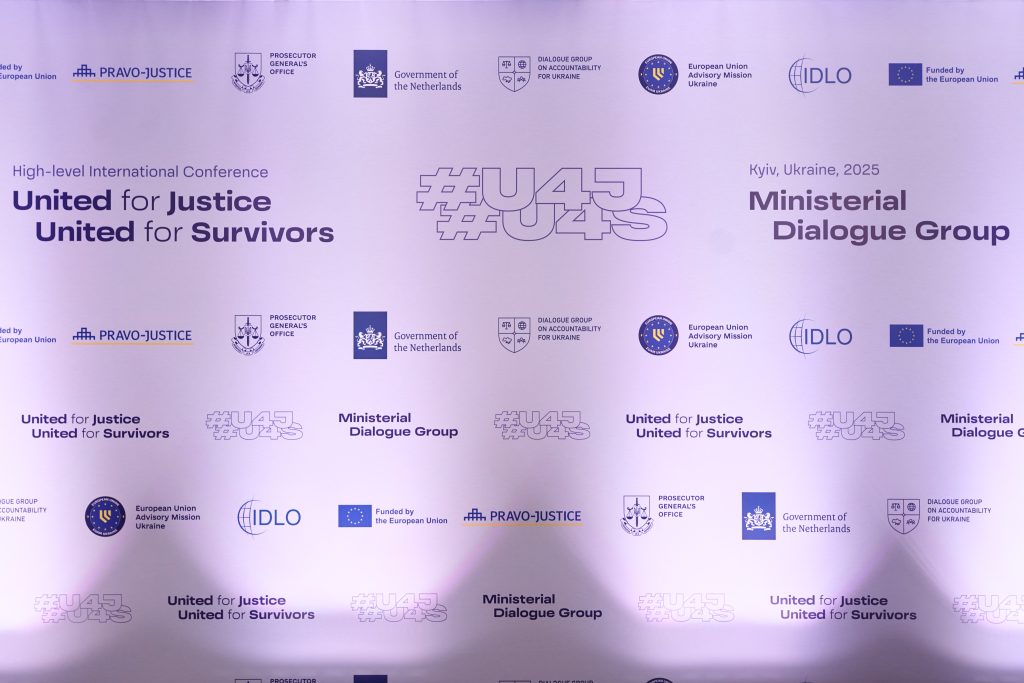
The event was organized by the Office of the Prosecutor General in conjunction with the Government of the Netherlands, with support from the EU Advisory Mission in Ukraine (EUAM), the Netherlands through International Development Law Organization (IDLO), and the EU Project “Pravo-Justice.”